Just like me, you’ve probably been there.
A room with too many strip lights.
Hot desks and cold desks.
Air conditioning that never works.
Start times and end times.
And madness.
The madness is one’s own. It starts as boredom. Mutates into frustration. And graduates into madness.
The madness is not what you’re currently doing, it’s what you want to be doing: Prowling a street looking for photographic prey.
It’s madness because so much about street photography is mad. Think about it: You want to use your leisure time to go somewhere to take pictures of strangers going about their day. You know, like the way you go about your day.
Some of those strangers are probably hating their day at the point you choose them as the object of your attention; of being a non-consensual participant in your pastime that gives you a kick/need for a distraction from the strip lights. Some may be heading into work having had a stressful school drop off, or be heading into work knowing said work would be horrible, or maybe they’re thinking about their blood test results, or how to pay a bill, or the mean thing their friend had said to them. Maybe they’re grieving or braced for grieving. In remission or terrified they won’t get there. Or maybe, they just don’t want someone they don’t know exploiting their mood/look/way they approached a shadow (the long departed Fan Ho being the exception here).
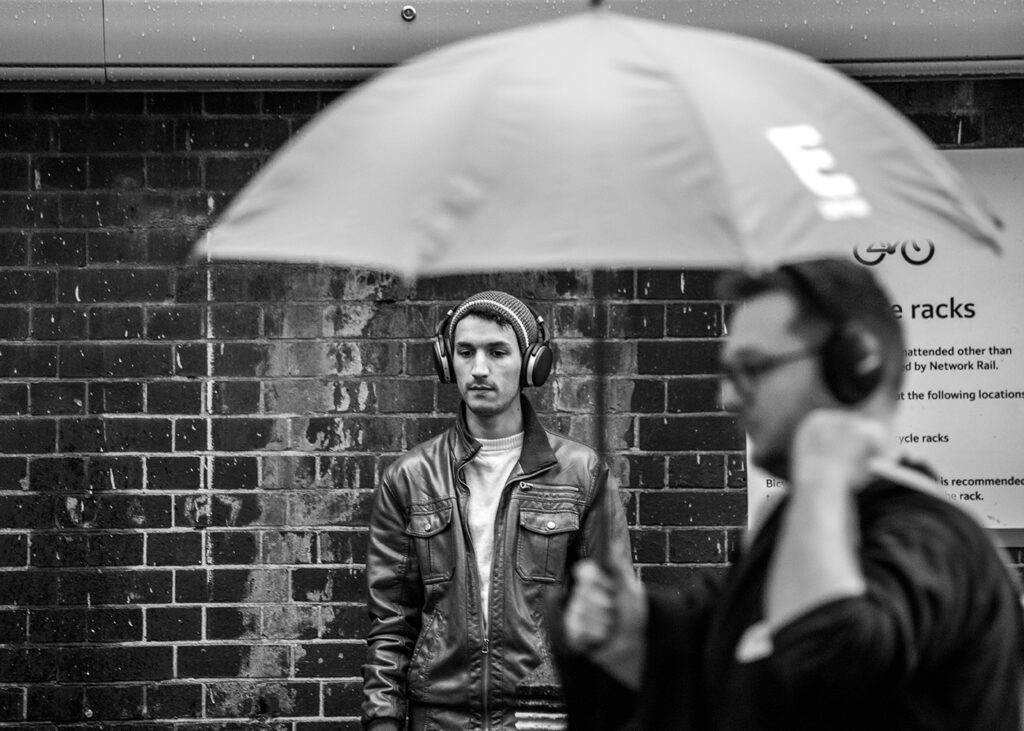
And then, and this is where it gets really weird, you want to load those images into software (or, follow a chemical mixing/scanning process if that’s your jam) so that you can stare at them on a big screen all with the aim of emailing them to yourself to share on a smaller screen for people you don’t know to pass (typically) unqualified judgement on.
Said judgement comes in the form of a just add water comment (Amazing! Great Pic! Stunning!) that does nothing to make you any better at doing what deep down you know you should be doing, which is striving to improve through qualified critique and running a mile from being derivative.
Rinse repeat Saturday.
Rinse repeat Sunday.
Rinse repeat whatever day/time you identify as being street photography time.
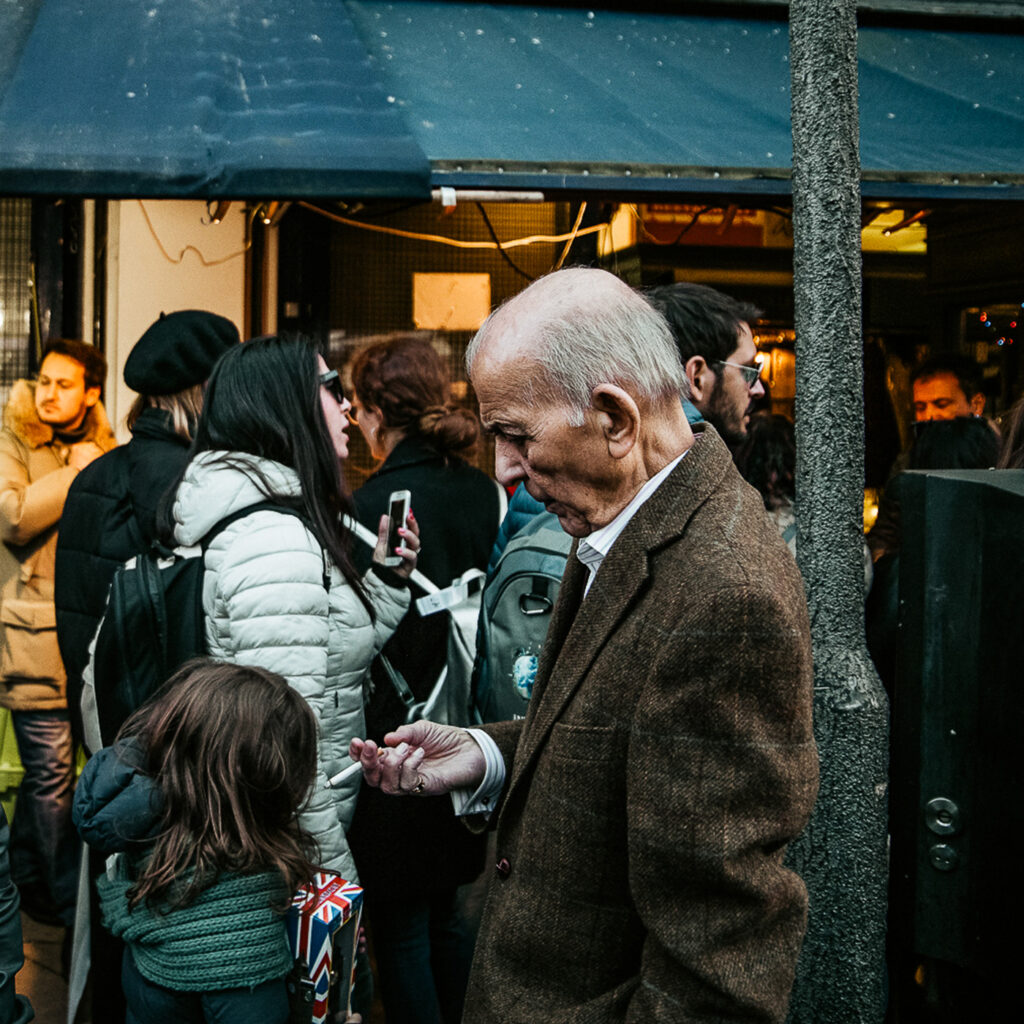
So …..why do so many photographers do it? Why are so many photographers (this writer included) hooked/obsessed/ preoccupied at some point in their camera carrying lives by street photography?
Gosh that’s easy to answer.
But also … that’s really hard to answer.
Let’s try the easy to answer part for some of you.
The Why
The why that outranks all others goes thus: Holding a camera at your hip or to your eye temporarily silences thoughts, distractions, anxieties, troubles, and unwelcome/unhealthy self talk from your consciousness. All irritating voices are muted by the voices you actually want to hear:
1. Anticipate the picture
2. Watch your back
3. What’s the clutter
4. What’s the story
5. Make the picture
6. Do better
7. Find the picture
And so on and so on.
The voices fall away when you’re not anticipating. When you’re not primed to make just that one frame that you’ll hate yourself for if you miss it. Hours or just minutes of being like this gives you the why. The temporary silence of all the garbage that breeds and mutates when you’re not holding a camera. This is the purest form of the why.
Now for the part where the why starts to become polluted. The part when you think about what comes next: The Share.
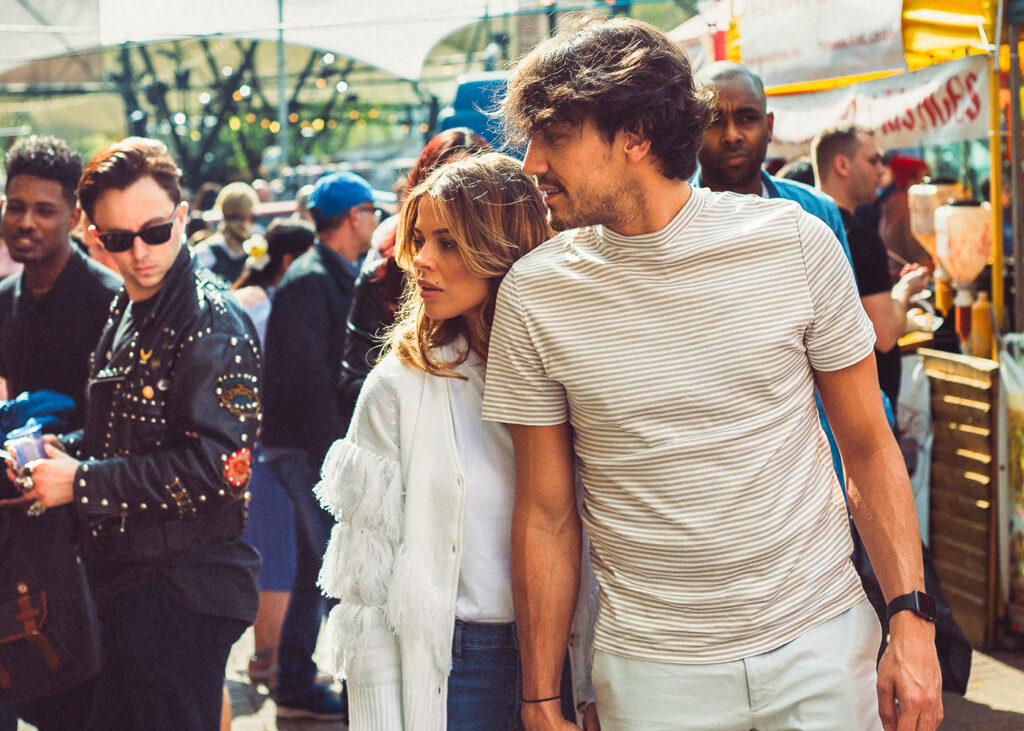
The Share
Conceited, insecure and desperate for acknowledgment of your work/self, you make a bid for attention in the form of thrusting a picture in front of people. These people may be real people to you. Spouse, next of kin, connected by blood, childhood friends, in-person friends, remote friends, forgotten friends, or just people in your digital circle for no reason other than you are in theirs.
The numbers in your screen tribe aren’t you. The interpersonal social rank of a person with ten followers can be higher than the person with a million. But social media is not about interpersonal connectivity and thus the social rank of the double, triple figure account name will feel like economy class as you watch the four, five, nay six figure accounts scurry up the rank ladder in business class and first.
And so you press on, swapping the fantastical upgrade for the frayed rosette of low count likes and unqualified, you like me, I’ll like you, hollow praise.
Perhaps this is the peak of street photography madness. Not the thinking or the doing. Instead, the pursuing. The pursuing of validation, when you have no need for it. You have need for objective, qualified critique, but we all know that’s counter to the online etiquette of praise or rage. Neither will help you become a better photographer. So let’s go back to the doing.
We’ll move on from the previous whys; the self soothing, therapeutic ones that get corrupted by the seeking validation in all the wrong places ones (the author has been found guilty of this on numerous occasions when it comes it to photography. It’s seductive, ensnaring, and will get you at some point. Try and escape it, even if on day release).
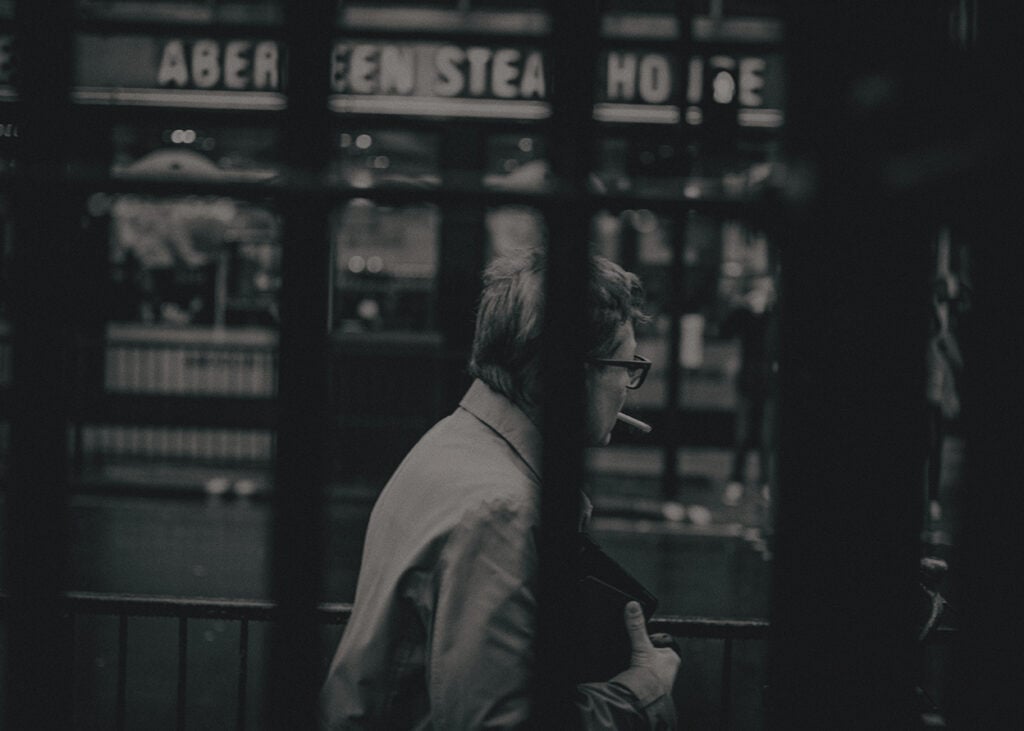
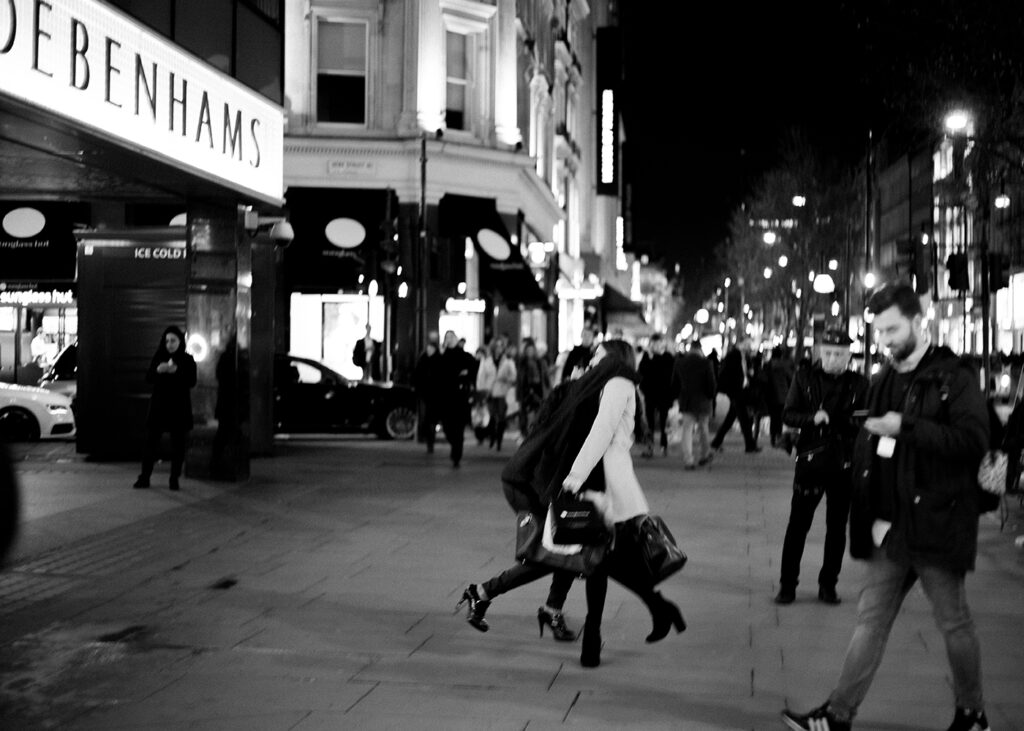
We’ll look instead at what we should be doing out on the street: Making good work, for the sake of making good work. Yes, I can hear you say ‘what’s good work’, so I’ll have a crack at answering that (it’s not the photo above which I took on Oxford St). The list is not gospel, just my opinion, and hey, one day I might change my mind on these. But as we go to print, I stand by the list below.
My take on what good street photography is:
- Good street photography comes with an alarm in the photographer’s head. It can loud, subtle, aggressive or polite, it doesn’t matter, but it does need to be triggered when the photographer knows they are being derivative. For example: ‘There is a gap between two sharp columns of jet black shadows from a building. If I just wait over there, someone will step in the gap of light between the shadows and it will make a picture’. The alarm goes off and the photographer realises they are just copying a copy of a copy of a copy (repeat gazillions of times). If an alarm doesn’t go off in your head, and you have never been near Instagram, or a photography website, or photo book, or a gallery, or looked at any picture in a medical waiting room, hotel lobby, or anywhere that has pictures hanging on a wall or in print, then go take the picture. You’re clean. No judgies.
- Good street photography has a brutal, considered edit. For example, you have 50 pictures before you and you want to make an essay, what are the 6-10 pictures you are going to retain. If they are of the same scene, which picture will be the establishing shot, which will be a bridge, which will be an end, what joins them as a subject. Or, if you are only going to pick one, knowing why you are going to cull the 19 out of the 20.
- Good street photography is engaging enough to make into a print that will cost you so much you’ll think twice about whether the work is good enough to pay a premium price for one print. A helpful starting point is A3 using cotton rag. Find the best printer with a user experience that makes life easy, then order that print.
- Good street photography wasn’t taken with a belief that one day the picture will be considered an important record of how we lived our days. Forget that future talk justification. The picture needs to stand up today against its peers for the following: When someone else looks at the picture, will their instinct tell them to keep looking.
- Good street photography is accompanied with words. Words are good. They add texture, context, your thoughts, what your saw, why you care. Don’t add the yawns about your fstop, shutter speed and ISO. It’s a given you chose these. Tell me about why you made the frame at the time you did, what you felt, what it says, how it fits into a narrative, or if it is just a standalone picture that shows (insert whatever you think it shows. I dunno … this is for you to fill in, it’s your picture).
- Good street photography is devoid of artifice. Please note, this does not mean being devoid of street smarts/common sense/watching your back. What it means is that you haven’t walked around with a hidden camera, or disrespected someone by taking their picture sneakily when they’ve clearly indicated they don’t want you using them as your own pet project.
- I’m also not saying that you should go all Bruce Gilden (the exact opposite to being sneaky, Gilden has the minerals to be up front about what he’s doing) or be a Martin Parr wannabe, though I would say you should get used to asking people if you can take their picture, and also get used to saying very quickly, and confidently, why you want to take their picture. Carry proof that you’re not some douchebag doing it for a quick hit. An example would be, you’re one of the throngs of photographers taking pictures of market stall holders in London’s Notting Hill on a Saturday. The people who run these stalls are busy, need to have a watchful of everything, and are many hours away from being back at home. You approach one, introduce yourself and say you’re making a personal project of market stall holders and then you show them a small book of pictures you’ve had printed of market stall holders in Brick Lane or Camden. This should give you 30 seconds to a minute of the person’s time. You don’t need any more to make a picture in this context.
- Good street photography is not a 6/10 when it would have been a 7/10 had the photographer been switched on. When you’re on the street, you should always be ready. You should know how to change the core settings on your camera without looking, and you should have that camera good to fire anyway. You snooze, you lose.
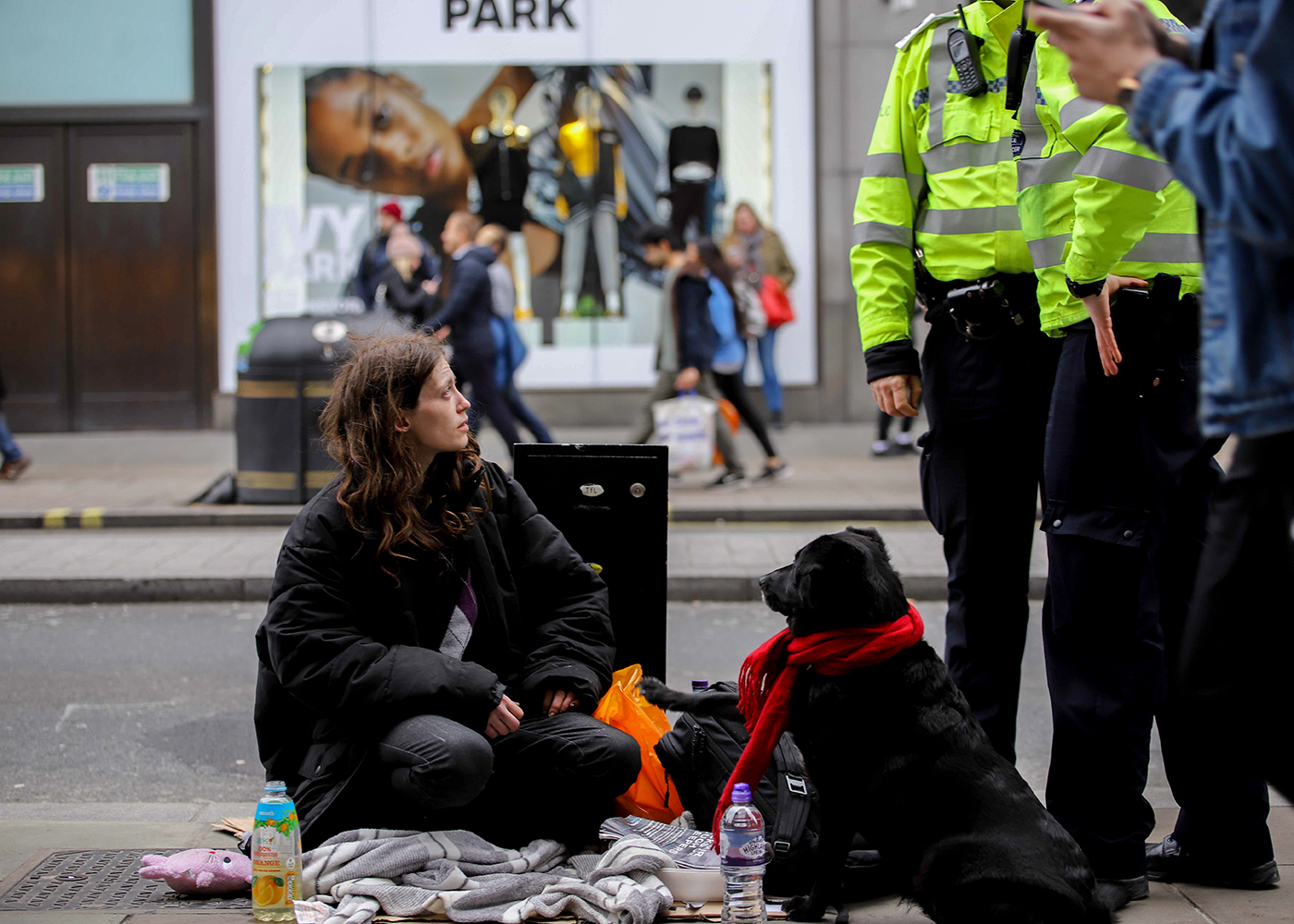
Street photography examples to help some of the points land
You’ve waded through a whole lot of words so far, and not many pictures to illustrate my points. Let’s remedy that.
Example 1: The need for words
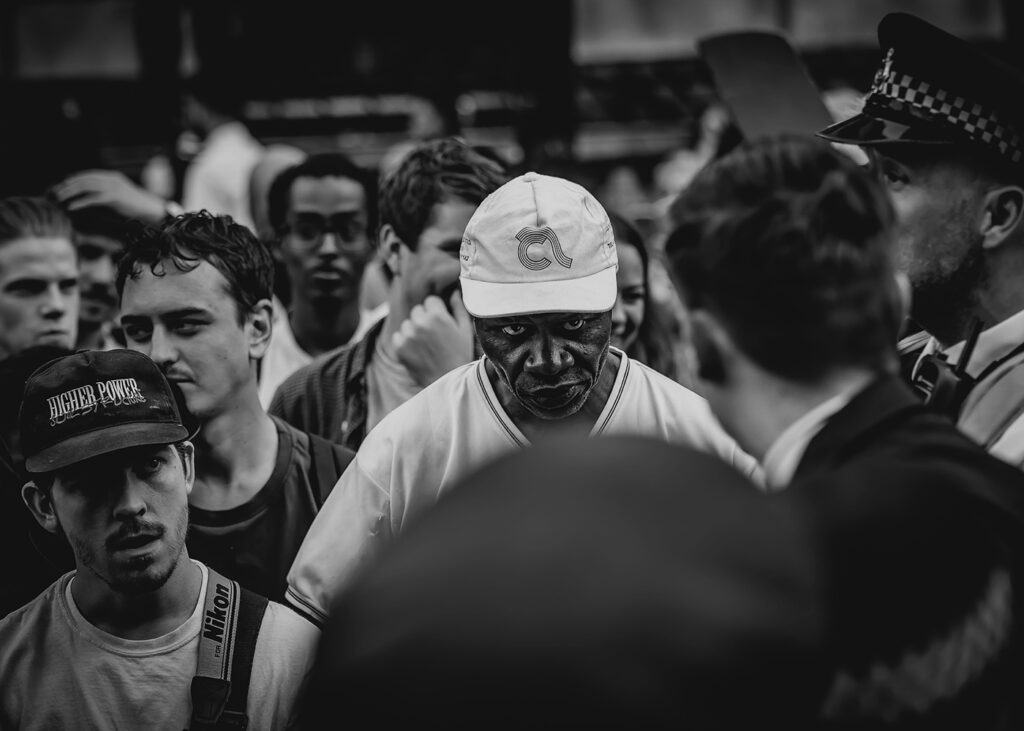
You can work out much from the picture above by looking at it. The presence of a police officer and the central figure’s expression, coupled with the expression of the man to his right, show that one party (the one with his back to the camera), is being offensive, provocative, extreme.
The picture shows disbelief/resentment on the part of the audience (perhaps because of the police officer’s presence) and it shows numbers, which says there is an outer structural layer, most likely a protest. Given the officer has the hat of a UK (well, Metropolitan Police) officer, you can deduct that this picture was taken during a protest in London and that a sole figure has sought to antagonise others.
Words are not needed thus far.
Here is where they are needed: Context and reflection.
The context: It is July 18, 2018, and Donald Trump is in town for a visit. He’s not welcome with the around 250,000 people who take to London’s streets in a visual call to arms. There are ‘Dump Trump’ placards galore, loud hailers, speeches, and a blimp of a baby-esque Trump. There are police, road closures, groups bused in from the regions, locals, onlookers, and people with cameras documenting it all, including moi. For all the go-away, we don’t want you here messaging, the mood is joyful. Like-minded souls displaying resistance delivers the dopamine of camaraderie, history witnessing, and a platform for uplifting tubthumping.
The sun is shining. The weekend is upon us. Central London, for a time, belongs to ‘the people’. Like these people, below.
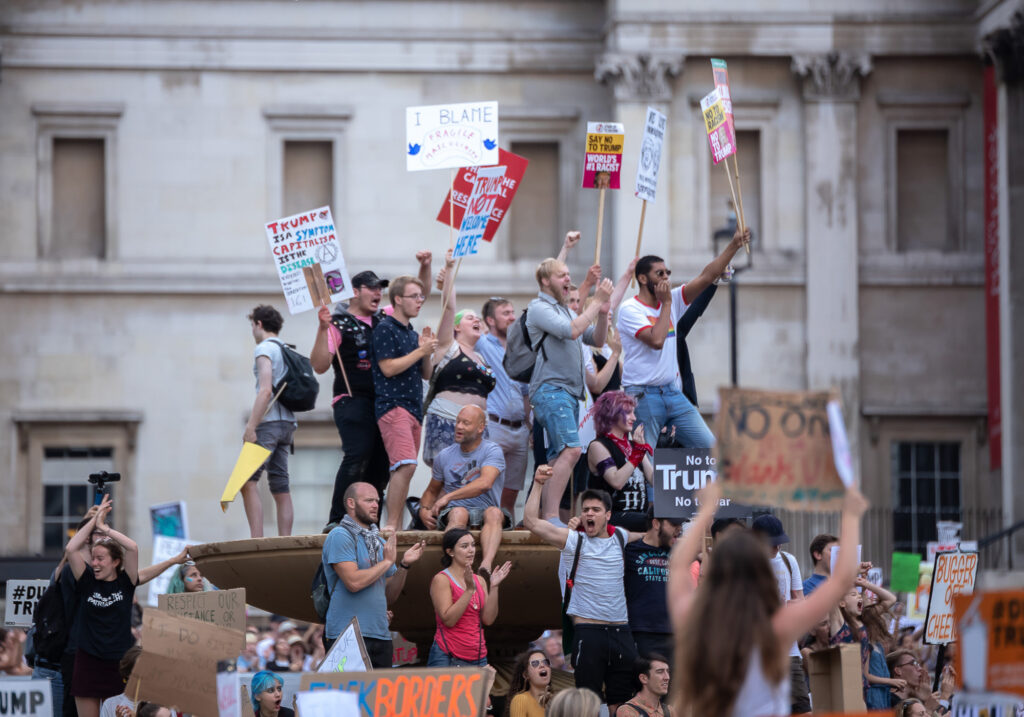
All is (reasonably) well.
Until it isn’t.
If you’ve been to a few protests you know what’s coming: The counter protest. There is always imbalance in numbers, with the fewer compensating by dialling up their chest beating views, finger pointing, and venom. Over the hill they typically come, escorted by the law, kept at arm’s length from the other group, but close enough to get everyone all riled up.
A memo musn’t have gone out amongst the counter protesters for Trump’s visit as there was no co-ordinated masse of people who cling to his inflamatory views. Instead, there were sole antagonisers in MAGA attire, generally behaving politely.
And then, just as people were making their way up Whitehall, past a fortified Downing Street, comes the guy in the picture, the one with his back to the camera. He takes position where people are mingling and begins his bid for attention. Strong at projecting, he projects white supremacist bile at the masses. The police sniff danger and step in, but don’t act, just observe and listen. He skirts the edges, apparently, of what is an arrestable offence. More people gather. The antagoniser, emboldened by the attention and now aware of his impunity, cracks on.
More bile.
Some turn away. The views are hard to listen to. The man in the picture, the one staring at the antagoniser, shows restraint throughout. He stares. Says nothing. Resists what the antagoniser is pushing for him to do: React.
But he doesn’t.
The antagoniser is defeated.
Had the picture not had that context then it wouldn’t have delivered reflection. It’s not reflection from the photographer, but reflection from the person viewing the photo. That might be fleeting, it might be a few moments. But at least it is something.
Words can stop the scroll, both physical and digital. Think about the words you would write for your street photography.
On to the next reason.
Example 2: The need to avoid artiface
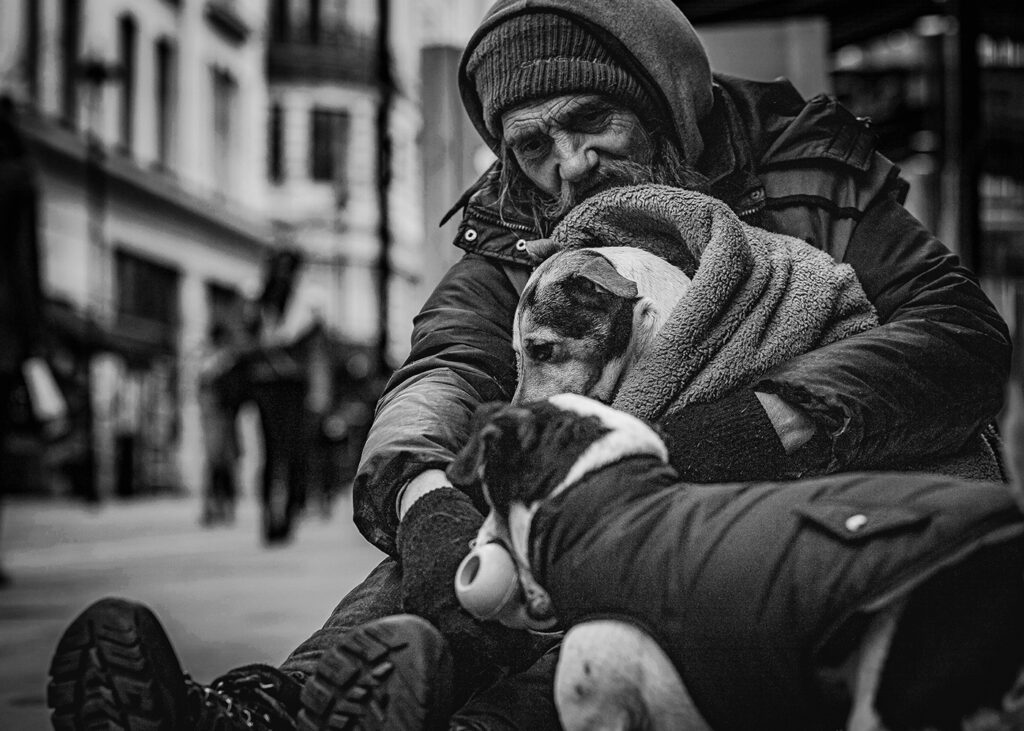
The alternative to the picture above does not exist, but it so very could have done. It would have been one of ten metres distance and crooked because the camera had been lowered down the leg of the photographer and the shutter button fired as they looked the other way. The photographer would have justified the subterfuge by arguing they didn’t want to disturb a scene; that they were being truthful to the tapestry to their side, and that to step in would have been to disturb this capture of a connection between a man sleeping rough and his two companions.
That is the alternative. It is one of low ambition and timidity. Of having only one foot in the door of street photography commitment, and a philosophy that you are a detached observer at all times and thus excused from approaching people, being polite, and asking if you can take their picture. That approach would not have produced the picture above, and any words accompanying it would have referred to a man and his two dogs, instead of John (the man), Mist and Rain (the dogs).
A few words of guidance are needed here on the going straight in with a ‘can I talk your photo’ approach. Had I done that with John, Mist and Rain, I wouldn’t have pictured the above scene that shows a connection between a man and his dogs. I may well have been told where to go, and understandably so.
It was about an hour in of sitting with them off Oxford Circus in London that I made the request. John was fine about it, and I got two frames. Five seconds and then back to whatever we were talking about. You won’t have an hour of chats with everyone, and you need to be prepared for a rejection, but lingering in your comfort zone will hold back. Be street smart (there’s a section below on this), but try not to make being sneaky your thing. You’ll miss out on the good stuff.
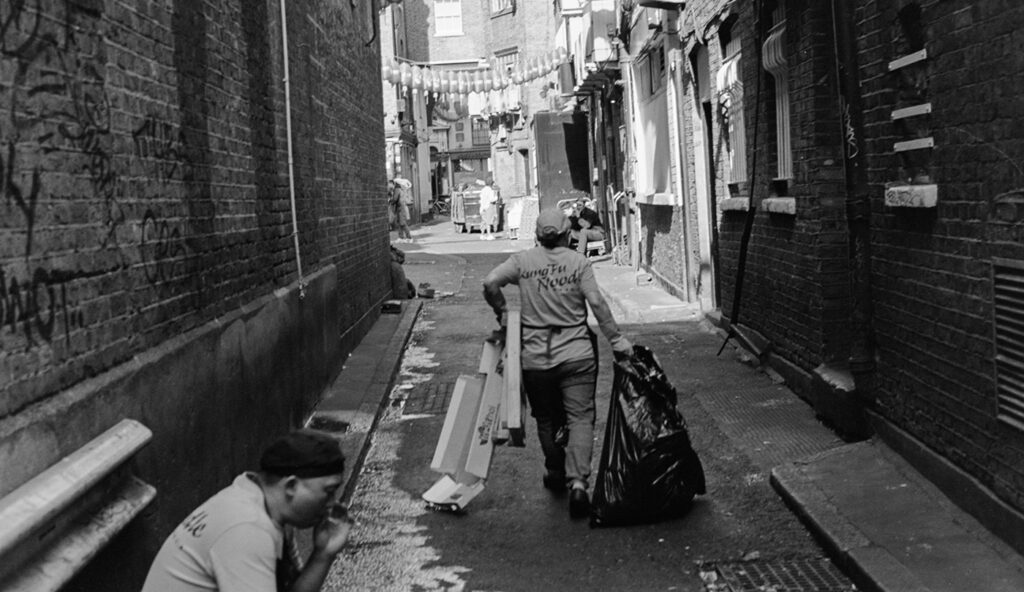
Curiosity, focus, and a need to be street wise
Now, if you’ve got this far, even if you’ve skimmed, I’m going to take it you have an interest in street photography. As a practice, as a release, as a training ground, as an expression, it has no cap. You don’t need much. You need a camera body and one unobtrusive lens. You need time. Nous. Be well read (photographer books with strong work). You need to be street smart and not a prick. You need an alarm in your head. A focus. You need something that connects your picture with something that person A will find interesting. You need eyes in the back of your head and an exit plan if the situation goes south. You need to be curious and comfortable in your own company. You need to love it knowing one day you may hate it. And you need a street/some place out in the public realm.
Oh, and you do need to be a little mad. And you do need to be obsessed. Trainspotter obsessed.
It’s not that much you need.
So maybe you should go and do it. And if you don’t want to listen to me, listen to Jay Maisel.
“If you are out there shooting, things will happen for you. If you’re not out there, you’ll only hear about it.”
Want to chime in with your view?
It’s been one voice thus far on the page. Your voice is welcome in the form of a comment on the form lower down, or to someone else, or to yourself. It can be helpful to get it all out. Play nice, but not so nice you compromise your views.
About the author
David Dunham is the Editor of The Photographer Club. His photography experience includes working as a portrait photographer in London, event photographer, wedding photographer, sports photographer, and for a UK aid charity. Away from photography, he has a news media background, working as a deputy editor, senior producer and chief reporter for organisations in the UK and New Zealand.
Be Part Of A Community
Suggested Further Reading: